
NASA’s Viking Mission & The Search for Life on Mars: The Experiments …
The Viking Mass Spectrometer: Analytical Pioneering on the Martian Frontier
Imagine building a chemistry lab, shrinking it to the size of a toaster, and then hurl it 140 million miles across the cold vacuum of space just to see if anything is breathing in the dirt. That was the reality for the team behind the Viking Mass Spectrometer in the mid-1970s. Look—we take Mars rovers for granted now because we see high-def photos of the Red Planet on our phones every morning, but back then? It was pure, unadulterated science fiction turned into a multi-billion dollar reality.
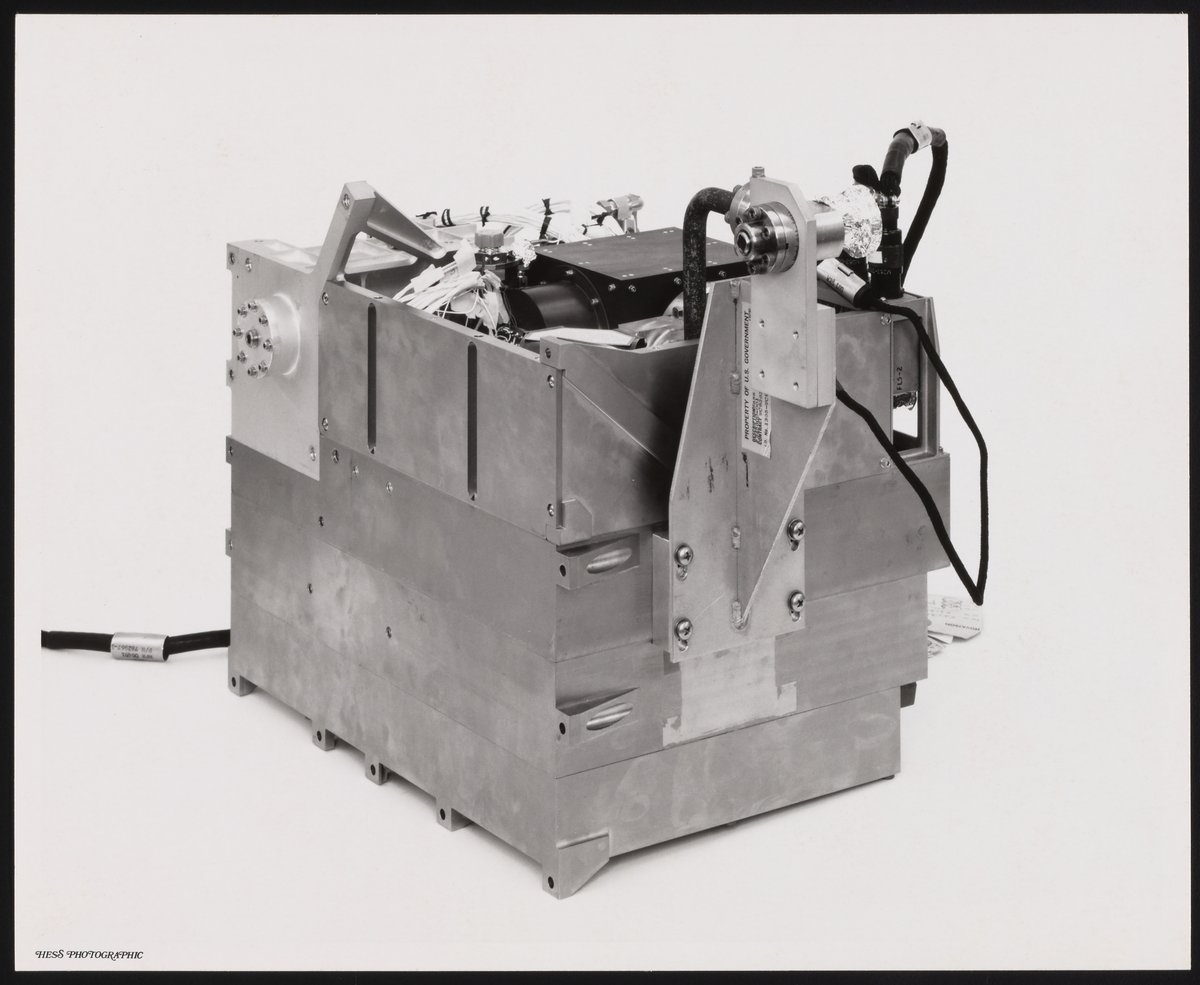
The Viking Gas Chromatograph-Mass Spectrometer (GCMS) was the heart and soul of the 1976 Viking Landers. It wasn’t just a piece of hardware; it was our first real “eyes and ears” on the molecular level of another planet. As someone who has spent over a decade staring at mass spec data, I can tell you that the technical achievement of these units was nothing short of miraculous. We are talking about vacuum tubes and discrete electronics surviving a 15-G landing and then operating in a freezing, carbon-dioxide-rich atmosphere.
The Viking Mass Spectrometer had a very specific, high-stakes job: find organic molecules. If there was life on Mars, or even the remnants of past life, carbon-based molecules were the smoking gun we were looking for. Honestly? The results changed the course of planetary science for the next fifty years. It gave us an answer that nobody expected, and it launched a debate that still keeps planetary scientists up at night over their third cup of lukewarm coffee.
It’s a big deal because the Viking biological experiments were the first and only time we specifically went looking for “life” as a primary mission objective. Every mission since then has been about “habitability” or “water,” mostly because the Viking GCMS results were so confusingly sterile at the time. We learned that Mars is a lot more chemically complicated than a simple desert. It’s a harsh, oxidizing environment that plays by its own rules.
The Architecture of the Gas Chromatograph-Mass Spectrometer
To understand the Viking Mass Spectrometer, you have to realize it was actually two machines working in a tag-team effort. First, you had the Gas Chromatograph (GC), which acted like a molecular sorting machine. It took a sample of Martian soil, heated it up in a tiny oven, and pushed the resulting gases through a long, thin tube. Different molecules travel through that tube at different speeds, effectively separating the “mess” of Martian soil into distinct chemical groups.
Planetary Probe, Viking, Gas Chromatograph Mass Spectrometer, PLANETARY …
Then came the mass spectrometer part. This is the “scale” that weighs the molecules. As the separated gases exited the GC, they were bombarded with electrons to turn them into ions. A magnetic field then swung these ions around a curve. Lighter molecules zipped around fast; heavier ones took a wider turn. By measuring where these ions landed, the Viking analytical instruments could tell us exactly what those molecules were based on their mass-to-charge ratio.
The High-Temperature Ovens and Soil Pyrolysis
The soil didn’t just fall into the Viking Mass Spectrometer by accident. A robotic arm scooped up the Martian regolith and dropped it into a distribution assembly. From there, the soil was loaded into tiny ovens that could crank the heat up to 500 degrees Celsius. This process, called pyrolysis, was designed to break down any complex organic matter into smaller, gaseous pieces that the Mars GCMS could actually swallow and analyze. It was a violent way to treat a sample, but in 1976, it was the only way we knew how to do it remotely.
One thing people forget is how much power these ovens pulled. On a planet where every watt of electricity is precious, heating dirt to 500 degrees is an expensive hobby. The Viking lander hardware had to manage its power budget perfectly to ensure the mass spec didn’t brown out the rest of the ship. If you think your laptop gets hot running too many tabs, imagine a 1970s spacecraft trying to bake rocks while communicating with an orbiter overhead. It’s impressive stuff.
The Ionization Process and Detection Limits
Once the gases were baked out, they entered the Viking mass analyzer. This was a double-focusing magnetic sector instrument. For the non-nerds, that basically means it used both electric and magnetic fields to get a super-precise measurement of the molecular weights. The sensitivity was incredible for its time. It could detect organic compounds at levels of parts per billion. That’s like finding a single specific grain of sand in a massive beach volleyball court.
However, this sensitivity was also its “Achilles heel” in some ways. Because it was so sensitive, it easily picked up the cleaning fluids used on Earth before the launch. Scientists had to spend a huge amount of time filtering out the “Earth noise” from the “Mars signal.” It’s the classic problem in spaceborne mass spectrometry: you have to be absolutely sure that what you’re smelling isn’t just the perfume of the technician who packed the crate three years ago.
Viking gas chromatograph and mass spectrometer instruments – Science …
The Shocking Results of the 1976 Martian Soil Analysis
When the first data packets started trickling back from the Viking Mass Spectrometer, the science team was floored. They expected to find something—anything. Even if there wasn’t “life,” space is full of organic molecules. Meteorites are covered in them. Comets are made of them. We figured the Martian surface would at least have a “dusting” of organic carbon from billions of years of meteorite impacts. But the Viking GCMS found… practically nothing. It was cleaner than a surgical suite.
The Viking life detection experiments were suddenly in a state of crisis. While the biology packages (like the Labeled Release experiment) were showing weird, positive signals that looked like metabolism, the Viking Mass Spectrometer was saying there were no organic building blocks to support that life. It was a massive contradiction. How can you have “breathing” soil if there’s no carbon? It was the ultimate scientific “he said, she said” moment happening on another planet.
The Perchlorate Revelation and Chemical Masking
For decades, we thought the Viking Mass Spectrometer results meant Mars was a dead, self-sterilizing desert. But then, in 2008, the Phoenix lander found perchlorates in the soil. This changed everything. Look—perchlorates are nasty salts that, when heated, become incredibly aggressive oxidizers. Remember those ovens I mentioned earlier? When the Viking lander GCMS heated the Martian soil, the perchlorates likely woke up and torched any organic molecules present before the machine could see them.
In a cruel twist of irony, the very process used to find the organics probably destroyed them. If you take a piece of steak, put it in a pan with some bleach, and crank the heat to 500 degrees, you aren’t going to have a steak left to analyze. You’re going to have carbon dioxide and chloromethane. Interestingly, the Viking Mass Spectrometer actually did detect small amounts of chloromethane, but the scientists at the time dismissed it as Earth-based contamination. We might have actually “seen” Martian organics and just didn’t realize it.
The Sterile Mars Hypothesis and Its Downfall

The Mass Spectrometer
The initial conclusion from the Viking chemical analysis was the “Sterile Mars” hypothesis. It suggested that the intense UV radiation from the sun, combined with the dry atmosphere, created a surface that was toxic to life. This narrative dominated NASA’s strategy for thirty years. We stopped looking for life and started “following the water.” It was a safe bet, but it was largely driven by the sobering (and potentially misinterpreted) results of the Viking mass spec.
Today, we know better. We’ve seen that Mars has complex organics in its rocks, thanks to the Curiosity rover’s modern version of the mass spectrometer. The difference is that Curiosity knows how to handle the perchlorate problem. It uses different chemical “derivatization” techniques that don’t involve just blasting everything with heat. The Viking mission legacy isn’t that it failed to find life, but that it taught us exactly how hard we have to look and how careful we have to be with our chemistry.
The Enduring Legacy of 1970s Analytical Technology
Despite the controversy over the results, the Viking Mass Spectrometer remains a titan of engineering. We haven’t significantly changed the core physics of how we do this. If you look at the Sample Analysis at Mars (SAM) suite on the Curiosity rover today, you’ll see the direct descendants of the Viking tech. We’ve added better computers, more sensitive detectors, and fancier ovens, but the “GC-MS” combo is still the gold standard for planetary organic chemistry.
The Viking mission results forced us to become better chemists. We couldn’t just assume that “life” would be easy to find. We had to learn about the “oxidizing nature of the Martian regolith” and the “stability of organic molecules under UV flux.” The Viking Mass Spectrometer was the first instrument to tell us that Mars isn’t just a cold Earth; it’s a chemically unique world with its own strange, reactive personality.
-
- The design of the Viking Mass Spectrometer paved the way for every subsequent “search for life” instrument.
Mass Spectrometer, Gas Chromatograph, Project Viking, Prototype …
- It established the baseline for the “background” chemistry of the Martian atmosphere.
- The Viking GCMS data is still being re-analyzed today using modern computer models and lab simulations.
- It taught us that “negative results” are often more important than “positive” ones in the long run.
If you ever get a chance to see a spare Viking lander instrument in a museum, take a second to really look at it. It’s a dense, heavy box of wires and stainless steel. There were no microprocessors as we know them. No high-speed internet to troubleshoot the code. It was a “fire and forget” mission that worked perfectly, even if the data it sent back was more complicated than we were ready to handle. Honestly? That’s just good science. It’s not supposed to be easy.
Common Questions About The Viking Mass Spectrometer
Did the Viking Mass Spectrometer find life on Mars?

Mass spectrometry – Principle, Structure, Working & Uses
No, the Viking Mass Spectrometer did not find direct evidence of life. While it was designed to find the organic building blocks of life, it returned results that were largely interpreted as “sterile.” However, modern re-evaluations suggest that the presence of perchlorates in the soil might have masked or destroyed the organic compounds the Viking GCMS was trying to detect.
Why is the Viking GCMS still talked about today?
The Viking GCMS remains a hot topic because of the “perchlorate correction.” Since we now know Martian soil contains these reactive salts, many scientists believe the Viking Mass Spectrometer actually did detect Martian organics (in the form of chlorinated hydrocarbons) but the team at the time attributed them to Earth-based cleaning solvents. It’s one of the great “what ifs” of space history.
How does the Viking Mass Spectrometer compare to modern instruments?
The Viking Mass Spectrometer was a pioneer, but modern instruments like the SAM suite on Curiosity are far more advanced. Modern versions use “wet chemistry” labs to bypass the perchlorate problem and have much higher mass resolution. That said, the basic concept of using a gas chromatograph and mass spectrometer together is still the primary way we analyze soil on other planets.
What happened to the actual Viking Mass Spectrometers on Mars?
The two Viking Mass Spectrometers are still sitting on the Martian surface at the Viking 1 (Chryse Planitia) and Viking 2 (Utopia Planitia) landing sites. They functioned for several years until their batteries and components eventually failed due to the harsh Martian environment. They serve as silent monuments to the first time humanity reached out to touch the chemistry of another world.