
How Many Times Can An Electron Microscope Magnify
Transmission Electron Microscope Resolution Limits and Practical Magnification Ranges
Imagine standing at the edge of a cliff, looking down at a grain of sand that somehow contains an entire universe of structure. That’s basically what it feels like the first time you sit in a darkened room, the hum of vacuum pumps vibrating through your boots, and see an individual column of atoms shimmer into focus on a phosphorescent screen. I’ve spent over a decade squinting at those glowing green dots, and let me tell you, the sheer scale of the thing never gets old. People always walk into the lab and ask the same thing right away: just how many times can a TEM magnify before the image falls apart? It’s a fair question, but the answer is a bit more nuanced than a simple number on a dial.
Look—in the world of light microscopes, we’re stuck with the physics of visible light, which is like trying to paint a masterpiece with a four-inch house-painting brush. You can only get so much detail before the physics of diffraction says “no more.” Transmission Electron Microscopy, or TEM, swaps out those chunky photons for high-energy electrons. Since electrons have a much smaller wavelength, we can effectively shrink our “brush” down to the size of a needle point. This shift is what allows us to push past the limits of conventional optics and dive into the sub-atomic realm.
Honestly? Magnification is almost a secondary concern for those of us who live in the land of electron microscopy. We care about resolution. You can magnify a blurry photo of a cat a million times, but you’re still just looking at a giant, blurry blob. The magic of the Transmission Electron Microscope is that it provides the resolution necessary to make those high magnifications actually mean something. It’s the difference between seeing a crowd from a satellite and seeing the individual stitches on a person’s shirt from that same height.
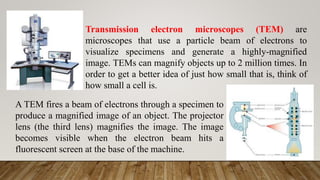
When we talk about how many times can a TEM magnify, we are usually discussing a range that starts where light microscopes end and stretches into the tens of millions. It is a staggering leap in capability. Most high-end instruments in research facilities today can comfortably resolve features down to less than 0.1 nanometers. For context, that is smaller than the diameter of a single hydrogen atom. It is truly mind-bending stuff when you stop to think about it.
The Physics Governing Electron Optical Limits
To understand the ceiling of these machines, we have to look at the de Broglie wavelength. In a Transmission Electron Microscope, we accelerate electrons to near-light speeds using high voltage, typically between 80kV and 300kV. The faster those little guys move, the shorter their wavelength becomes. Shorter wavelengths mean we can resolve smaller objects. It is a fundamental rule of the universe that you cannot see something smaller than the wave you are using to look at it. This is why electron optics completely dominates the field of high-resolution imaging.
The lenses we use aren’t glass; they are powerful electromagnetic coils that bend the path of the electron beam. These lenses are incredibly temperamental. If the room temperature fluctuates by half a degree, the metal in the lens expands, and your focus drifts into the abyss. Dealing with these “spherical aberrations” is the bane of every microscopist’s existence. Even the best electromagnetic lenses have flaws that limit how many times can a TEM magnify while maintaining a crisp, usable image for the researcher.
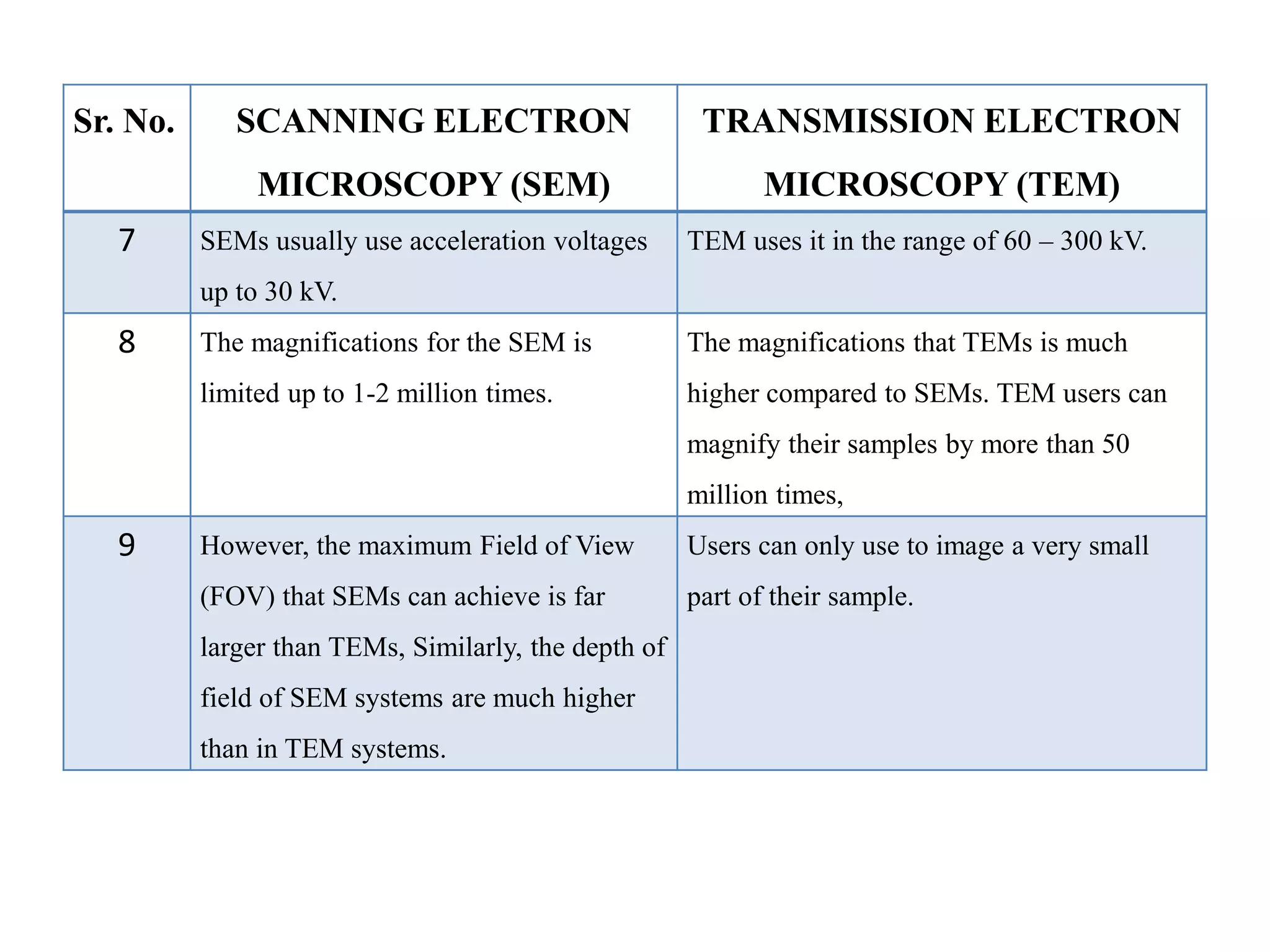
Difference between SEM and TEM | PPTX
Think of it like this: if you have a perfect lens, you can achieve “atomic resolution.” In the early days, we were limited by the inherent “blurriness” of these magnetic fields. However, modern aberration-corrected TEM systems use complex computer-controlled hexapole lenses to cancel out these errors. It is essentially like putting glasses on a person who was legally blind. Suddenly, the magnification power of the instrument isn’t just a theoretical limit; it becomes a practical tool for mapping out individual atoms in a crystal lattice.
Seriously, the engineering required to keep a beam of electrons stable enough to hit a target smaller than an atom is nothing short of heroic. We are talking about vacuum levels cleaner than outer space and vibration isolation tables that weigh several tons. Every single component in the column must work in perfect harmony. If any one part is slightly out of alignment, the question of how many times can a TEM magnify becomes irrelevant because you won’t see anything but grey noise and frustration.
The Role of Acceleration Voltage
The voltage you choose is the primary driver of your potential resolution. A 100kV beam is great for biological samples like thin slices of a cell, but it won’t give you the “punch” needed for high-resolution material science. Higher voltages mean shorter wavelengths, which theoretically allows for higher magnification levels. However, there is a catch—higher energy beams can also shred your sample to pieces before you even get a chance to take a photo. It’s a delicate balance between seeing the structure and destroying it.
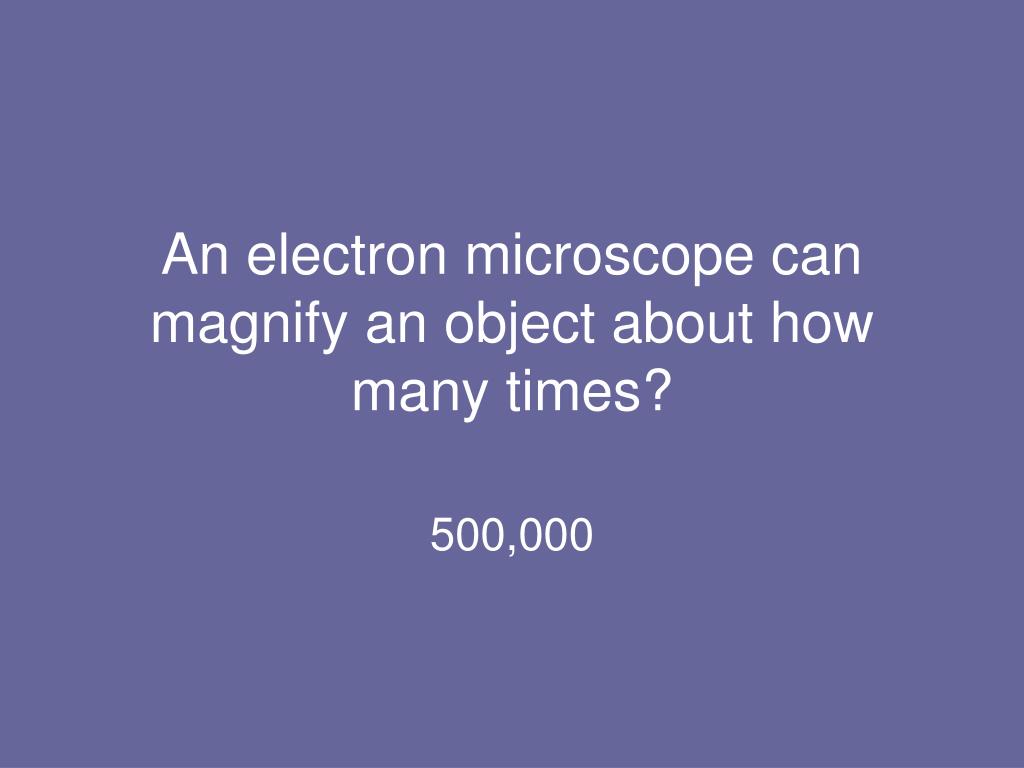
I’ve seen expensive ceramic samples turn into Swiss cheese in seconds because the operator pushed the voltage too high. You have to be smart about it. In many cases, we use lower voltages and compensate with better detectors. The theoretical magnification of the machine might be 50,000,000x, but your sample might only survive at 500,000x. Knowing when to stop is a skill that takes years to master.
Electromagnetic Lens Aberrations
No lens is perfect, and magnetic lenses are particularly messy. They suffer from astigmatism, where the beam is oval instead of circular, and chromatic aberration, where electrons of different speeds focus at different points. Correcting these is a manual process that involves “stigmator” knobs and a lot of patience. If you don’t correct for these, the high-resolution imaging capabilities of your million-dollar machine will be no better than a toy microscope.
We use “Sherzer focus” as a sweet spot to balance these errors. It’s a specific setting where the phase contrast of the image is optimized. When you hit that spot, the TEM magnification finally produces those beautiful, clear lattice fringes. It feels like magic every time it happens. You go from a noisy screen to a perfect grid of atoms with just a tiny twist of a knob.
PPT – Engaging Review of Cellular Structure and Function: Team …
Real-World Magnification Ranges and Practical Use
Let’s talk hard numbers. In a standard lab setting, you’ll spend most of your time between 50,000x and 500,000x. This is where you can see nanoparticles, grain boundaries in metals, and the internal structures of viruses. When people ask how many times can a TEM magnify, they are often surprised to learn that the “useful” magnification is often lower than the “maximum” magnification listed in the marketing brochure. Just because the dial goes to 10 million doesn’t mean you should always use it.
When we push into the 1,000,000x to 50,000,000x range, we are entering the realm of High-Resolution Transmission Electron Microscopy (HRTEM). This is where we see the “bones” of matter. You aren’t just seeing a particle anymore; you are seeing how the atoms are stacked inside that particle. This level of atomic-scale imaging is vital for semiconductor research and nanotechnology. If a single atom is out of place in a modern transistor, the whole chip could fail, and the TEM is the only tool that can find that mistake.
Most modern microscopes use a combination of optical magnification (from the lenses) and digital magnification (from the camera). Look—digital zoom is great, but it doesn’t add new information. The true magnifying power of the instrument is determined by the electron optics before the beam ever hits the sensor. If the resolution isn’t there at the start, no amount of “Enhance!” in Photoshop is going to save your data.
In practice, the limit is often defined by the “signal-to-noise ratio.” As you go higher in magnification, the number of electrons hitting each pixel on your camera drops. The image gets grainier and harder to read. To get a good shot at 2,000,000x, you might need to leave the shutter open for several seconds. If the building vibrates or the sample drifts even a tiny bit during those seconds, the image is ruined. This is why high-magnification microscopy is as much about environmental control as it is about the microscope itself.
-
- Low Magnification (50x – 10,000x): Used for “searching” the grid to find your sample.
- Medium Magnification (10,000x – 100,000x): Ideal for viewing whole organelles, bacteria, or large polymer structures.
Lecture 7b. Microscope. types and functions | PPT
- High Magnification (100,000x – 1,000,000x): The sweet spot for nanoparticles and complex crystal defects.
- Ultra-High Magnification (1,000,000x+): Reserved for atomic resolution and lattice imaging in crystalline materials.
Factors That Kill Your Maximum Magnification
You can have the best Transmission Electron Microscope in the world, but if your sample preparation is bad, you’re wasting your time. Electrons are very weak; they can’t punch through thick chunks of material. If your sample is thicker than about 100 nanometers, it will just absorb the beam, and you’ll see a big black shadow. Preparing samples for TEM analysis is an art form involving diamond knives, ion beams, and a lot of prayer. If the sample is too thick, the question of how many times can a TEM magnify is moot because no electrons are getting through to make an image.
Then there’s “drift.” At a million times magnification, even the thermal expansion of the sample holder can make the image zip across the screen like a startled rabbit. You have to wait for the system to “settle” for hours sometimes. I’ve literally had to hold my breath while taking a picture because the air current from my lungs was enough to jiggle the microscope column. It is that sensitive. This mechanical instability is the real-world ceiling for microscope magnification in most labs.
Contamination is another silent killer. Even in a vacuum, there are stray carbon molecules floating around. When the electron beam hits the sample, it can “bake” these molecules onto the surface, creating a black blob of gunk right where you’re trying to look. This “carbon contamination” obscures fine details and prevents you from reaching the maximum magnification potential of the instrument. We use liquid nitrogen “cold traps” to try and suck these impurities out of the air, but it’s an uphill battle.
Finally, we have to talk about the “Point Resolution” vs. “Line Resolution.” Some manufacturers will claim a very high magnification range based on line resolution (the ability to see rows of atoms), but point resolution (the ability to see a single atom) is much harder to achieve. Always check the specs carefully. Don’t get blinded by the big numbers on the box; look at the actual imaging resolution benchmarks performed under real-world conditions.
Microscope.pptx
- Sample Thickness: Must be incredibly thin (usually <100nm) for electron transparency.
- Beam Damage: High-energy electrons can break chemical bonds and melt sensitive materials.
- Vibration: Seismic activity or even loud talking can blur high-magnification images.
- Vacuum Quality: Poor vacuum leads to contamination and beam scattering, ruining clarity.
Common Questions About How Many Times Can A Tem Magnify
Is there a hard limit to how small we can see with a TEM?
History of the Microscope Before the Microscope About
Yes, the limit is dictated by the wavelength of the electrons and the quality of the aberration correctors. Currently, the world record for resolution is around 0.4 to 0.5 Angstroms. Beyond this, we run into the Heisenberg Uncertainty Principle, where the act of observing the electron actually messes with its position. We are getting very close to the fundamental limits of physics in modern nanotechnology imaging.
Why do some TEMs have a higher magnification than others?
It usually comes down to the acceleration voltage and the quality of the lenses. A 300kV microscope has a shorter electron wavelength than an 80kV one, allowing for higher potential magnification. Additionally, microscopes equipped with specialized “aberration correctors” can maintain clarity at much higher levels than standard “un-corrected” machines.
Can you see a single atom with a standard TEM?
With a standard, older TEM, it is very difficult to see a single “isolated” atom, though you can often see rows or lattices of atoms. However, with a modern, high-end Transmission Electron Microscope that has aberration correction, seeing individual heavy atoms (like gold or platinum) on a light background is actually quite common now. It still feels like a miracle every time it happens, though.
Does digital zoom count toward the total magnification?
Technically, yes, but it is often called “empty magnification.” If the electron optics of the microscope only resolve 1 nanometer, zooming in digitally to see 0.1 nanometers won’t show you more detail; it will just show you a bigger, blockier version of the same 1-nanometer blur. True TEM magnification must be backed up by actual resolving power from the beam and lenses.
At the end of the day, the Transmission Electron Microscope is our best window into the invisible. It has taken us from wondering what a cell looks like to literally counting the atoms that make up our world. Whether you are magnifying 100,000 times or 50,000,000 times, the goal remains the same: to see the truth of how matter is put together. It is a journey that requires patience, precision, and a healthy respect for the laws of physics.