Mass Spectrometry Explained: Principle, Steps & Uses
The Four Essential Operational Phases of Mass Spectrometry Analysis
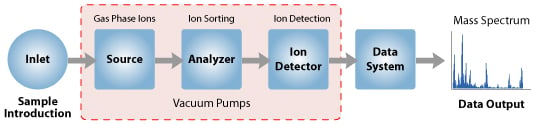
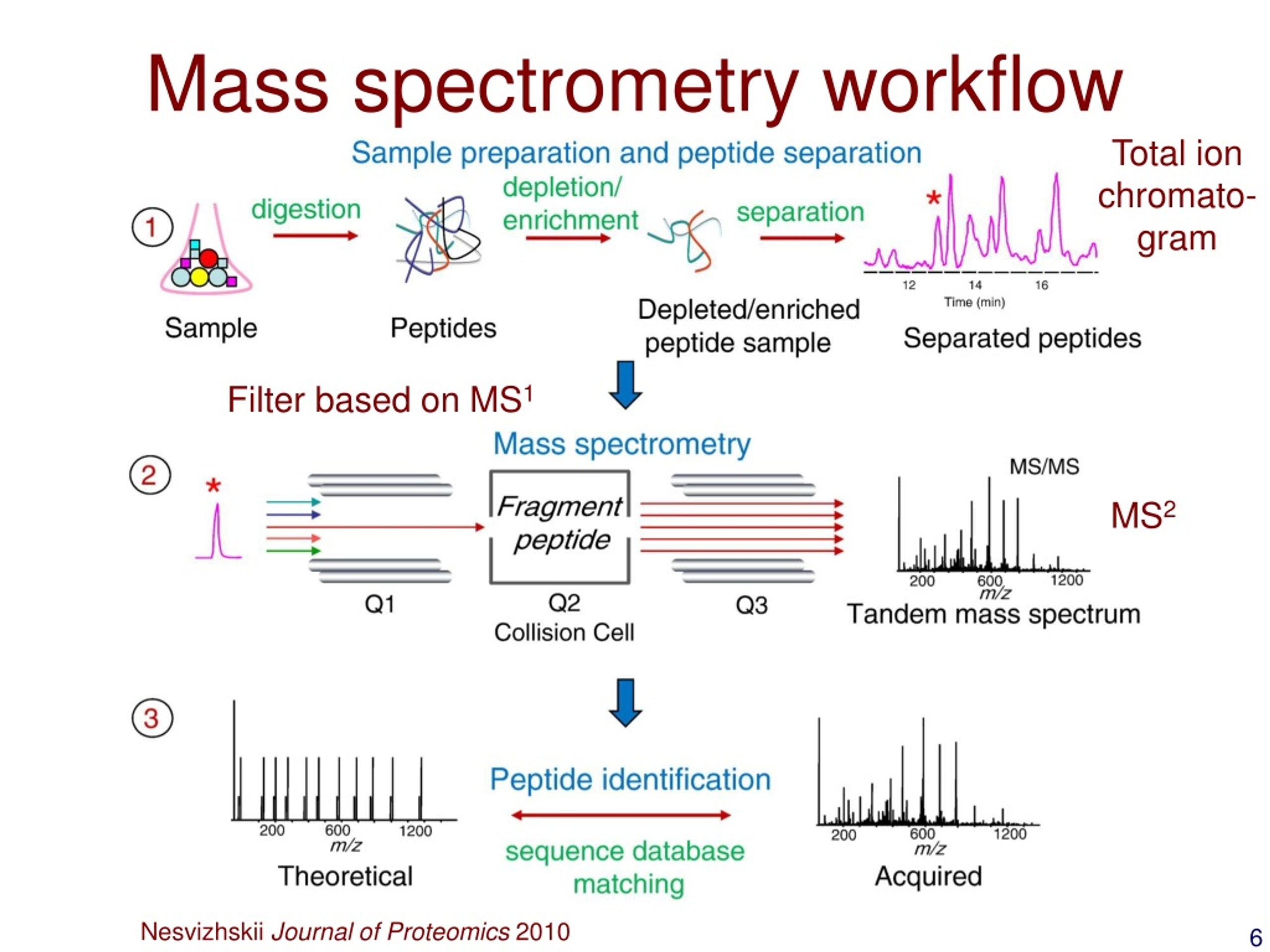
Think of a mass spectrometer as a high-tech, incredibly expensive version of a sorting machine at a post office, but instead of packages, we’re dealing with individual molecules. If you’ve spent a decade in the lab like I have, you know these machines are temperamental beasts that demand precision at every turn. To really grasp what are the 4 stages of mass spectrometry, you have to look past the flashing lights and complex software. At its core, this technology is about breaking things down to their most fundamental parts to see exactly what they’re made of.
I remember the first time I ran a complex protein sample; the anticipation was nerve-wracking because if just one of these four stages fails, your data is essentially garbage. It’s a sequence that cannot be skipped or rearranged. You start with a sample, and through a series of physics-defying maneuvers, you end up with a digital fingerprint. This process allows us to identify unknown compounds, quantify known materials, and even explore the isotopic composition of elements. It’s powerful stuff.
Look—it’s not just about the “how.” It’s about the “why.” Each stage serves a specific purpose in the journey from a bulk sample to a precise mass-to-charge ratio. Without these distinct steps, we’d just be looking at a soup of invisible particles with no way to tell them apart. It is the ultimate exercise in molecular profiling.
Seriously, once you understand these phases, the entire field of analytical chemistry starts to make a lot more sense. We’re going to dive deep into each one, stripping away the academic fluff and getting into the real-world mechanics of how these instruments actually function. It’s a wild ride through vacuum chambers and magnetic fields, so let’s get into the specifics of what are the 4 stages of mass spectrometry.
Stage One: The Ionization Energy Kickstart
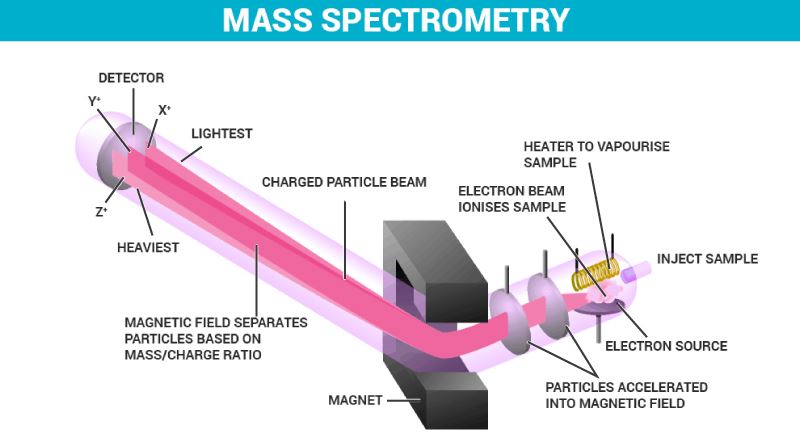
Everything starts with ionization. You can’t move a molecule with magnets or electric fields if it doesn’t have a charge. In this first phase, we take our neutral sample and turn it into a collection of gas-phase ions. It’s like giving every person in a crowd a bright neon vest so you can track them from a helicopter. If the molecule stays neutral, the machine literally cannot see it. It just drifts around and eventually gets sucked out by the vacuum pumps.
There are several ways to do this, depending on what you’re looking at. Electron Ionization (EI) is the classic “hard” method where we blast the sample with a beam of high-energy electrons. It’s brutal. It breaks the molecules into fragments, which actually helps us identify the structure later on. For more delicate samples, like proteins, we might use “soft” methods like Electrospray Ionization (ESI) or MALDI. These methods are much gentler, ensuring the molecule stays intact while it picks up a charge.
Honestly? This is where most of the “magic” happens. If you don’t get your sample ionized correctly, the rest of the run is a waste of time. You have to balance the energy input; too much and you destroy the molecule entirely, too little and you don’t get enough signal to see anything. It’s a delicate dance that defines the entire analytical process. Most lab techs spend half their day just optimizing this single stage.
When discussing what are the 4 stages of mass spectrometry, ionization is always the gatekeeper. We are creating a plasma or a cloud of charged particles that are ready to be manipulated. Once those ions are formed, they are vulnerable and reactive, which is why the entire system has to be under a high vacuum. If they hit an air molecule, they’ll just bounce away and disappear. We need a clear path for the next step.
Overview Of Mass Spectrometry _ Mass spectrometry – MAHZGY
The Mechanism of Electron Impact
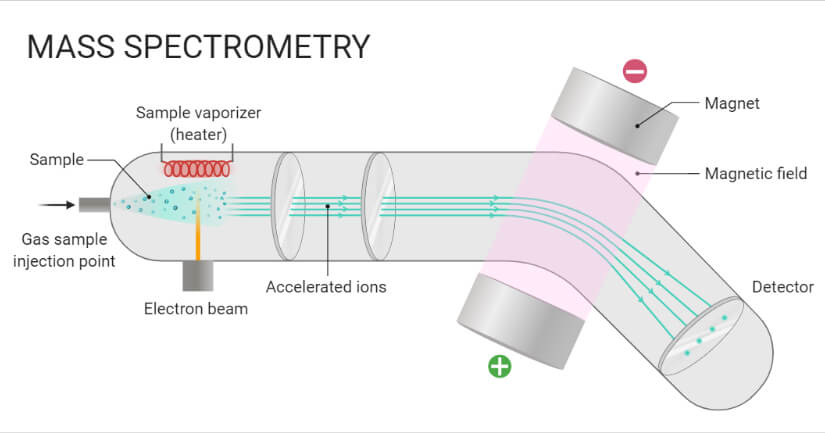
In the world of small molecules, Electron Impact (EI) is king. We boil a filament to release electrons and accelerate them across the path of our vaporized sample. When an electron hits a molecule, it knocks another electron loose. This creates a positive ion. It’s a high-energy environment that creates a very reproducible fragmentation pattern, which is basically the “DNA” of the molecule in our libraries.
Soft Ionization for Biological Giants
If you tried EI on a large protein, you’d just get a pile of molecular dust. That’s where Electrospray Ionization comes in. We push a liquid sample through a charged needle, creating a fine mist. As the solvent evaporates, the charges get pushed closer together until the droplets explode into individual charged molecules. It’s an elegant solution for studying the building blocks of life without shredding them to bits.
Stage Two: The Acceleration Phase
Once we have our ions, we need to get them moving. This is the acceleration stage. We use an electric field to pull those ions out of the source and push them toward the analyzer. Think of it like a starting gate at a horse race. We want all the ions to have the same kinetic energy so that the only thing that differentiates them later is their mass. It’s all about leveling the playing field before the real competition starts.
This is usually done with a series of metal plates called “grids” or “lenses.” By applying a high voltage to these plates, we create a potential difference that sucks the ions forward. The ions are repelled by the back plate and attracted to the front plate, which has a hole in the middle. They zip through that hole at incredible speeds. It’s a fast process—we’re talking microseconds here. Precision is everything in this ion optics phase.
The beauty of physics is that if every ion is subjected to the same voltage, their velocity will depend entirely on their mass. Heavier ions will move more slowly, while lighter ions will zip ahead. Even at this early stage, the separation is beginning to happen, though we haven’t “sorted” them yet. We are just giving them the momentum they need to survive the journey through the rest of the instrument.
It’s a big deal to keep this stage clean. If those grids get coated in junk from previous samples, the electric field gets warped. When the field is warped, the ions don’t accelerate uniformly, and your resolution goes down the drain. I’ve spent more weekends than I’d like to admit scrubbing ion sources with abrasive polish just to make sure the acceleration stage stayed consistent. It’s the unglamorous side of high-end science.
Potential Difference and Kinetic Energy

Mass Spectrometry (A-Level) | ChemistryStudent
The math here is actually quite simple: the work done on the ion (charge times voltage) equals its kinetic energy (half the mass times velocity squared). By controlling the voltage, we control the energy. This ensures that the only variables we deal with later are mass and charge. It is a fundamental principle that makes the whole machine work.
Focusing the Ion Beam
We don’t just want the ions moving; we want them moving in a tight, coherent beam. We use “Einzel lenses” to squeeze the ion cloud together. If the beam is too wide, the ions will hit the walls of the analyzer and never reach the detector. It’s like focusing a flashlight beam into a laser pointer to ensure maximum efficiency through the vacuum chamber.
Stage Three: Deflection and Mass Separation
This is the heart of the machine. The deflection stage is where we actually distinguish one molecule from another. The ions enter a magnetic or electric field that forces them off their straight-line path. Because they all have the same kinetic energy (thanks to the previous stage), the amount they bend depends entirely on their mass-to-charge ratio (m/z). This is the “filter” that makes mass spectrometry so powerful.
Imagine you have a bowling ball and a ping-pong ball rolling at the same speed, and a giant fan is blowing across their path. The ping-pong ball is going to get blown way off course, while the bowling ball barely moves. That’s exactly what happens here. Light ions are deflected more easily than heavy ones. By varying the strength of the magnetic field, we can choose exactly which ions “make the turn” and head toward the detector.
In modern labs, we use different types of analyzers for this. A Quadrupole uses four metal rods with oscillating voltages to filter ions. A Time-of-Flight (TOF) analyzer doesn’t use deflection in the traditional sense; it just measures how long it takes for ions to travel a fixed distance. Regardless of the hardware, the goal is the same: separate the ions based on their physical properties. This is the core of mass analysis.
If you’re wondering why we call it m/z instead of just “mass,” it’s because a molecule with two charges will behave like a molecule with half its mass and one charge. The machine can’t tell the difference. This is a crucial distinction when interpreting the data. It’s one of those things that trips up students all the time. But once you get the hang of it, you can start calculating the true molecular weight of almost anything.
To summarize the separation process, we use:
Mass Spectrometry Explained: Principle, Steps & Uses
- Magnetic sectors to bend the path of the ions.
- Quadrupoles to act as a radio-frequency filter.
- Ion traps to catch and hold ions for further analysis.
- Flight tubes to measure the speed of the ions over a set distance.
The Magnetic Sector Influence
In a magnetic sector instrument, the ions follow a curved path. We can tune the magnet to a specific strength so only ions of a certain m/z can exit the curve. Everything else hits the sides. By “sweeping” the magnetic field strength, we can scan through the entire mass range and see everything that was in the sample. It’s old school, but it’s incredibly precise.
The Quadrupole Filter
Most benchtop units use a quadrupole. It’s a set of four rods that use a combination of DC and RF voltages. Only ions with the correct “resonance” can pass through the middle without spiraling out of control. It’s fast, it’s relatively cheap, and it’s the workhorse of most environmental and forensic labs. Honestly, without the quadrupole, mass spectrometry would still be a niche tool for physics professors.
Stage Four: The Final Detection
Mass spectroscopy for MSc I Chemistry of SPPU | PDF
The final stage of what are the 4 stages of mass spectrometry is detection. This is where the ions finally hit something and tell us they exist. The ion beam strikes a detector, which generates an electrical signal proportional to the number of ions hitting it. We’ve successfully turned a physical particle into a digital data point. It’s the finish line of a very high-speed race.
The most common detector is an electron multiplier. When an ion hits the surface, it knocks off a few electrons. Those electrons hit another surface, knocking off even more electrons. This cascade continues until you have a massive pulse of electricity from a single ion. It’s an incredible feat of amplification. We can detect even the tiniest trace amounts of a substance—we’re talking parts per billion or even parts per trillion.
Once the computer records these pulses, it compiles them into a mass spectrum. This is the graph you see on the screen with all the peaks and valleys. The position of the peak on the x-axis tells you the mass (m/z), and the height of the peak on the y-axis tells you how much of it was there. It’s the ultimate answer key to the mystery of your sample. You can finally see what you’ve been working with.
The thing is, the detector doesn’t know “what” the ion is; it only knows “that” something hit it. The intelligence comes from the calibration of the previous stages. If the analyzer was set to let through mass 180, and the detector sees a hit, we know we have an ion of mass 180. The software does the heavy lifting of mapping these signals into a readable format. It’s the end of the journey, and the start of the data interpretation phase.
- The ion hits the detector plate (conversion dynode).
- Secondary electrons are ejected and accelerated toward a multiplier.
- The signal is amplified millions of times.
- The current is measured by an ammeter and converted to a digital signal.
- The computer plots the signal intensity against the m/z ratio.
Mass spectrometry (MS) – Application, Instrumentation & Applications of …
Interpreting the Mass Spectrum
A mass spectrum isn’t just a list of numbers; it’s a story. The tallest peak is called the base peak, and the peak representing the unfragmented molecule is the molecular ion peak. By looking at the gaps between peaks, we can figure out what groups of atoms fell off during ionization. It’s like looking at the wreckage of a car to figure out its make and model. It takes years to get good at this, but it’s incredibly satisfying when it clicks.
Signal-to-Noise Ratio Challenges
In the real world, detectors deal with “noise.” This is random electrical interference or stray ions that aren’t part of the sample. A good specialist knows how to distinguish a real signal from the background hum. It’s why we obsess over vacuum levels and detector voltages. If the noise is too high, you’re basically trying to hear a whisper in a thunderstorm. You have to keep the system pristine to get those clean, publishable peaks.
Common Questions About What Are The 4 Stages Of Mass Spectrometry
Why does the whole system need to be in a vacuum?
If there were air molecules inside the machine, the ions would collide with them and lose their charge or be knocked off course before they ever reached the detector. A vacuum ensures a “mean free path,” meaning the ions can travel from the source to the detector without hitting anything else. Without a high-quality vacuum pump, the mass spectrometry process simply doesn’t work.
Can you skip the acceleration stage?
No, you definitely can’t. Without acceleration, the ions would just sit in the ionization source or drift aimlessly. You need the electric field to give them enough kinetic energy to enter the analyzer and overcome any resistance. Acceleration is what provides the “speed” component of the mass-to-charge calculation, making separation possible.
Is the order of the stages always the same?
Yes, the order is fixed by the laws of physics. You must create the ion first (ionization), then move it (acceleration), then sort it (deflection/separation), and finally record it (detection). While the specific hardware used in each stage can vary wildly between a portable gas chromatograph and a massive research-grade instrument, the sequence of the 4 stages of mass spectrometry remains the industry standard.
What happens if a molecule has more than one charge?
If a molecule picks up two charges (z=2), its mass-to-charge ratio (m/z) is effectively cut in half. To the analyzer, a 1000 Dalton molecule with two charges looks exactly like a 500 Dalton molecule with one charge. Modern software is designed to “deconvolve” these signals, allowing us to calculate the true mass even when multiple charging occurs during the ionization phase.